The Victorian Novel of Adulthood by Rainof Rebecca Elise
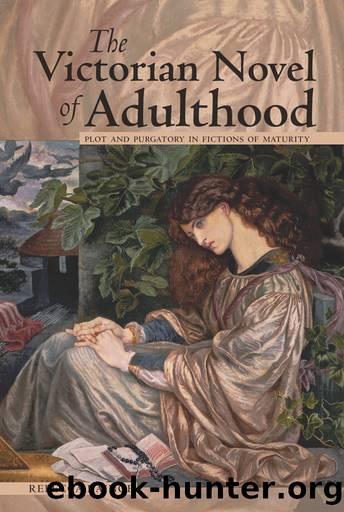
Author:Rainof, Rebecca Elise [Rainof, Rebecca]
Language: eng
Format: epub
Publisher: Ohio University Press
Published: 2015-06-15T00:00:00+00:00
CHAPTER FOUR
Odd Women and Eccentric Plotting
Maturity, Modernism, and Woolfâs Victorian Retrospection
Maturity and midlife, far from being a realm of âgeneral lost freshness,â as Henry James describes his own âmiddle years,â carry a freight of subversive potential for writers experimenting with new methods for resisting plotâthose âgig lampsâ of eventful storytelling that Virginia Woolf protested in âModern Fiction.â1 The familiar literary history is that this resistance to plot arose in the modernist era contemporaneously with Woolfâs imperative that writers strive to represent the âluminous haloâ of lived experience. Yet in exploring nineteenth-century novels that deviate from the bildungsroman, we see an early strain of this defiance already at work. From short fiction like Silas Marner and âThe Beast in the Jungleâ to sprawling multivolume novels like Little Dorrit and The Ambassadors, a suspended approach to plot can be found in works oriented around middle-aged characters, those figures clustered eccentrically around the edges of the Austenian dance floor earlier in the nineteenth century: confirmed bachelors, aging parents and grandparents, widows and widowers, and lastly, that figure of cheerful abjection, Miss Bates, the âold maidâ or âodd woman.â
The threat at the heart of Jane Austenâs Emma, a threat that goes unrealized in her narrative of formation, is that Emmaâs own plot will veer toward this margin. At Harrietâs concern that Emma âwill be an old maid! and thatâs so dreadful,â the heroine insists that the term does not apply to wealthy unmarried women, only poor ones, and she instead envisions an alternative life story that marks a radical departure from both the bildungsroman and the marriage plot as the available trajectories for female protagonists: âIf I know myself, Harriet, mine is an active, busy mind, with a great many independent resources; and I do not perceive why I should be more in want of employment at forty or fifty than one-and-twenty. Womanâs usual occupations of eye, and hand, and mind, will be as open to me then, as they are now; or with no important variation.â2 Emmaâs fantasy of her life âat forty or fiftyâ as an unmarried and fulfilled womanâthe continuing heroine of a life characterized by âsome of the best blessings of existenceâ (7) if not by marriageâis a plot that would take many decades to be realized as a common central story line in British fiction. Even Austenâs eldest heroine, twenty-eight-year-old Anne Eliot from Persuasion, evades this fate. The eight years Anne waits to reencounter Captain Wentworth, her interlude of suspension, is handled elliptically, the narrative commencing only with the renewed onset of their interrupted romance. Persuasion may be an unconventional marriage plot, telling of first love delayed until the heroine has self-consciously come of age, but it is not the account of the unmarried older woman that Emma fictively envisions. Miss Bates would have to wait until later in the century to receive fuller treatment. The elevation of the âodd womanâ from part of the melancholic decor to George Gissingâs central, albeit often unkindly represented, focus for his novel
Download
This site does not store any files on its server. We only index and link to content provided by other sites. Please contact the content providers to delete copyright contents if any and email us, we'll remove relevant links or contents immediately.
In Control (The City Series) by Crystal Serowka(36191)
The Wolf Sea (The Oathsworn Series, Book 2) by Low Robert(35200)
We Ride Upon Sticks by Quan Barry(34490)
Crowbone (The Oathsworn Series, Book 5) by Low Robert(33578)
The Book of Dreams (Saxon Series) by Severin Tim(33340)
The Daughters of Foxcote Manor by Eve Chase(23569)
Trainspotting by Irvine Welsh(21585)
Call Me by Your Name by André Aciman(20452)
The Secret History by Donna Tartt(18971)
Shot Through The Heart (Supernature Book 1) by Edwin James(18891)
All the Missing Girls by Megan Miranda(15812)
The Girl from the Opera House by Nancy Carson(15752)
American King (New Camelot #3) by Sierra Simone(15676)
Pimp by Iceberg Slim(14447)
Sad Girls by Lang Leav(14372)
The Betrayed by Graham Heather(12791)
The Betrayed by David Hosp(12741)
4 3 2 1: A Novel by Paul Auster(12343)
Still Me by Jojo Moyes(11231)
